Accompanying the Soul
What if the Soul is not simply something we possess, but a living intelligence we can learn to recognize, accompany, and consciously participate with?
In this IHOW laboratory, we explore the Soul as a versatile presence within the internal human orchestra: a connective loom of learning, intelligence, vitality, and mediation.
This practice develops a deeper question: rather than simply thinking of ourselves as having a Soul, can we develop a conscious, reciprocal relationship with her, learning to recognize her movements and participate more fully in her intelligence and purposes?and develops a practical way of sensing how the Soul may be present within the human system and within the ecologies of life we care for and participate in.
Key premises
The human being is not a single, undifferentiated entity. We are an intricate internal orchestra of processes, nervous-system activity, mind, emotion, attention, perception, memory, choice, and many other inner lives.
Within this larger ecology, the Soul can be approached as a connective loom of learning, intelligence, vitality, and mediation.
The Soul is not one thing and cannot be adequately described through any single image or definition. It has many capacities and expressions. A central premise of this inquiry is that the Soul has range.
Steps
- 1: Clear your mental and physical space, allow yourself to register the energy field around you
- 2: Choose a posture, sitting or standing, that allows you to feel completely at ease
- 3: Locate yourself in the core of yourself. Listen to the instructions and sense or imagine the different places that you are guided to
- 4: Experience your Soul contracting and expanding and move with it
It can gather its presence inward. It can more fully imbue the body. And it can extend its participation into relationships, places, creative work, responsibilities, and domains of care and devotion.
These are different configurations available to the Soul according to what life is asking and what the human system can presently hold.
Three Postures of the Soul
The exploration begins by settling into breath, bodily weight, subtle movement, and the discovery of stability within the living oscillations of the body.
Participants are then invited to enter through whichever portal of knowing is most available to them: somatic sensing, mental imagery, or spiritual attunement. These pathways may work separately or together.
From there, the practice explores three configurations of soul presence.
- Home Base
The first posture is one of gathering and concentration.
When life becomes fast, fragmented, or demanding, attention may become scattered and the human field can lose coherence. In such moments, the Soul may gather its concentrated vitality toward an inner home base, experienced in the lower spinal cord.
This is not treated as failure or withdrawal.
It may be a posture of safety, consolidation, protection, and recharge.
The inquiry becomes: Where is my Soul gathered right now?
And can I simply recognize and accompany her there without immediately trying to change anything?
- Full Embodiment
The second posture explores the Soul more fully imbuing the body.
From its concentrated home base, the sense of Soul presence is invited to extend through the organs, chest, shoulders, legs, skin, and the wider bodily field.
The participant may begin to sense an inner luminosity or vitality already present within the organism and become more consciously available to it.
The emphasis is not on producing an unusual experience. It is on allowing awareness to accompany a presence that may already be there. This configuration may bring a greater sense of coherence, regulation, vitality, and embodied presence.
The inquiry becomes: Can the Soul more completely inhabit and accompany the life of the body?
- Ecological Extension
The third posture extends the inquiry beyond the immediate bodily field.
The proposition is that the Soul can become invested through love, care, responsibility, creativity, inquiry, and devotion in the ecologies we tend.
A garden. A work of art. A healing practice. A relationship. A home. A community. A business. A field of inquiry. A place we have cared for over many years.
Through sustained attention and devotion, the Soul may develop a form of participatory knowing within that domain.
The inquiry becomes: Where has my Soul already invested herself through care?
And what intelligence may become available when we consciously attend to that relationship?
A deeper theme begins to emerge through the practice. We commonly speak as though we have a Soul. IHOW 17 invites a different relationship. The Soul is always accompanying us. Can we learn to accompany the Soul in return?
This reciprocal companionship develops through attention, listening, sensing, appreciation, and care. The movement is therefore not simply from contraction to expansion. It is a developmental passage from: unconscious accompaniment to recognition, to attunement, to dialogue, to reciprocal companionship, to conscious participation.
Devotion as a Way of Knowing
One of the more far-reaching premises explored here is that we may come to know differently through what we faithfully care for. Deep familiarity with a person, place, craft, or living ecology may not arise only through analytical observation or memory. Sustained devotion itself may cultivate another form of perception.
The gardener comes to know the garden. The artist comes to know the work. The healer comes to know the field of practice. The person who cares deeply for an enterprise or community may begin to perceive movements within it that cannot easily be reduced to information alone.
This introduces an important possibility: We may develop organs of perception through devotion.
Reverence Through Attention
The inquiry also offers another pathway into reverence. Reverence need not be manufactured as an emotional state. It may emerge naturally when we attend closely enough to the extraordinary intelligence already operating within ordinary life.
The human hand. The breath. The orchestration of the body. The capacity to learn. The ability of the human system to heal, adapt, create, relate, and participate.
Attention deepens into appreciation. Appreciation becomes recognition. And recognition can become reverence.
The Practice in Daily Life
The invitation after the guided exploration is simple.
A few times during the day, pause and sense inwardly. Where is my Soul presently gathered?
What is she imbuing? Where has she extended? What am I asking her to attend to? Is my field fragmented or coherent? Is greater expansion appropriate now, or is gathering and restoration what is needed?
Potential Benefits of the Practice
Over time, this inquiry may help develop:
- greater sensitivity to states of inner coherence and/or fragmentation
- increased somatic and energetic awareness
- a more intimate relationship with the Soul
- greater capacity for self-regulation and appropriate restoration
- deeper embodied presence
- awareness of where attention and vitality are being invested
- a more conscious relationship with creativity, relationship, service, and care
- increased capacity to sense when to gather, when to extend, and when simply to remain present
The Soul accompanies us everywhere. IHOW 17 asks whether the developing human can learn to accompany her in return.
This exercise allows us to sense and move with the Soul as she functions according to our need, whether we are fully aware or not. We come to feel thankful that she accompanies us on our human journey, us being companion to her as well, by our attunement and attention.

Rita Lampen

Beth Simpson
Life moves and when we move with it there is a happiness, a fullness and it feels purposeful. Beth works with individuals and small groups in healing, and moving with change to come into living fully. When we live purposefully, anything is possible!
Visit: Bewell.Care

Eleni Makri

Rob Eising
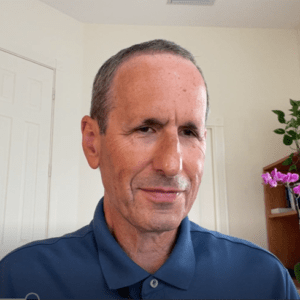
Aviv Shahar
Aviv serves as the Portals' sherpa. He curates transformational journeys and is a storyteller of the epochal evolution culminating at this time. Aviv is the Founder of Aviv Consulting, helping leaders unleash strategic innovation, and is the author of Create New Futures: How Leaders Produce Breakthroughs and Transform the World Through Conversation.
Visit: Aviv Consulting